
Basement Remodeling with Stone and Brick: A Michigan Homeowner's Guide
Yes, natural stone and stone veneer can be installed in basements — with the right preparation. Moisture management is the critical factor. A basement wall that has active water intrusion or vapor migration needs to be addressed before any stone goes up. On a properly prepared, dry substrate, stone veneer and natural stone tile perform well in finished basements throughout West Michigan.
Can you install natural stone in a basement?
Natural stone and stone veneer can be installed in basements when the walls are properly prepared and dry. The primary concern in any Michigan basement is moisture. Before installing stone, we assess the wall for any signs of water intrusion, efflorescence, or vapor migration. A wall that shows these signs needs waterproofing treatment before stone installation — otherwise moisture trapped behind the stone will eventually cause adhesion failure, mold growth, and damage to both the stone and the substrate.
What is the best stone for basement walls?
Stacked ledger stone panels and thin stone veneer are the most common choices for basement accent walls and full wall treatments. Ledger panels — flat pieces of natural stone mounted on a mesh backing — create a strong three-dimensional texture that adds visual interest and a sense of material weight to what might otherwise be a plain drywall surface. Slate and quartzite ledger panels are durable choices for basements. Full natural stone tile on basement floors — slate, limestone, or quartzite — works well when the concrete slab is properly prepared and any moisture concerns are addressed.
Does moisture affect stone veneer in Michigan basements?
Moisture is the number one enemy of any basement finish, including stone. In Michigan, basements are particularly susceptible to humidity-driven moisture, especially in summer when warm humid air meets a cooler below-grade wall. Stone veneer on a damp wall will eventually fail — the adhesive breaks down and the stones separate from the substrate. The solution is to address any moisture source before installation, use a moisture-tolerant setting mortar rated for below-grade applications, and seal the stone surface after installation to reduce vapor absorption.
How do you prepare basement walls for stone installation?
Preparation starts with moisture assessment. We inspect the wall for efflorescence, active leaks, or high humidity conditions. Any active water intrusion must be resolved before installation. The wall surface is cleaned of any paint, efflorescence, or loose material that would prevent adhesion. Depending on the substrate — concrete block, poured concrete, or framed drywall — the wall may require a scratch coat of mortar, a layer of cement board, or another preparation step to create a suitable bonding surface. Getting this preparation right is the difference between stone that stays in place for decades and stone that fails within a few years.
What are the most effective ways to use stone in a basement remodel?
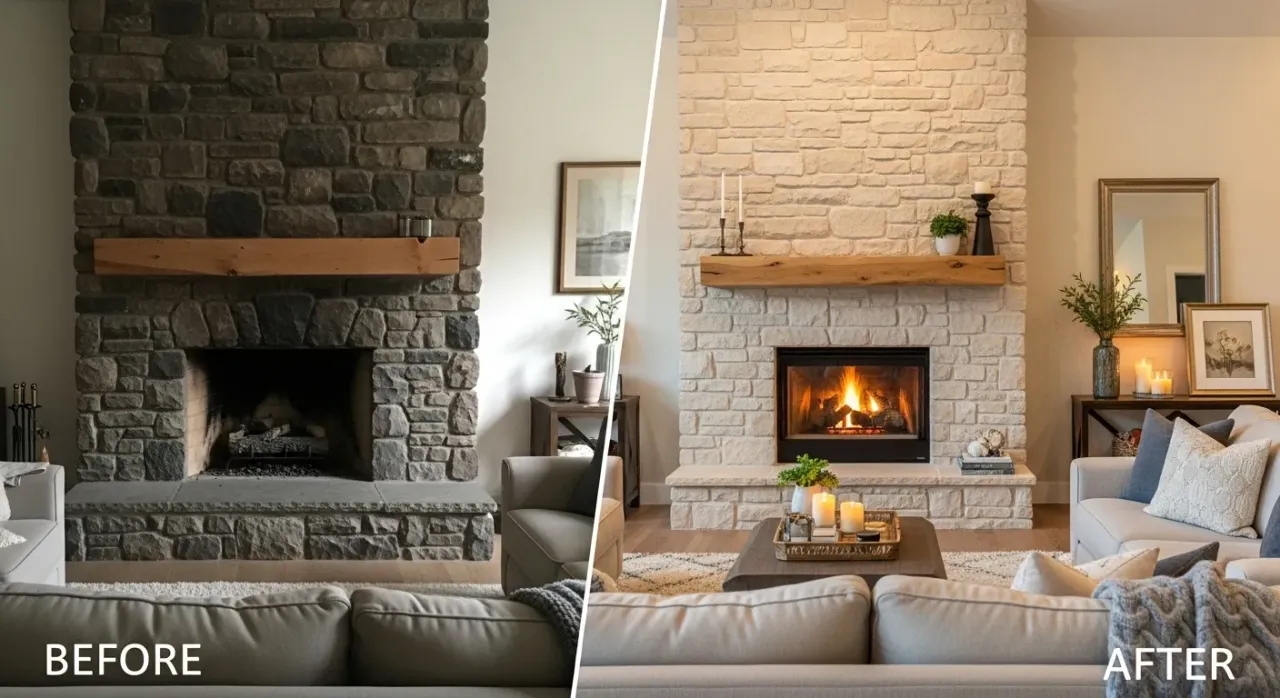
The most impactful applications are the accent wall behind a bar or entertainment area, the surround for a basement fireplace or wood stove, a stone feature wall in a finished family room, and stone tile flooring in lower-level entryways or utility areas. Stone on a single prominent wall transforms the feel of a finished basement without requiring full-room installation. In Grand Rapids and West Michigan, basement masonry with stone accents is a popular way to add both visual character and perceived value to below-grade living space. A fireplace refacing or new indoor stone veneer accent wall are the most requested basement upgrades we install. Contact Adam Baker Masonry at (616) 612-1284 to discuss your basement project.
Frequently Asked Questions
Can you install natural stone veneer in a Michigan basement?
Yes, when the wall is properly prepared and free of active moisture intrusion. Michigan basements require a moisture assessment before any stone installation. A wall with water infiltration or vapor migration needs to be waterproofed first. On a dry, prepared substrate, stone veneer performs well and is a popular choice for finished basement accent walls throughout West Michigan.
What is the best stone for a basement accent wall?
Stacked ledger stone panels — natural slate, quartzite, or fieldstone mounted on a mesh backing — are the most popular choice for basement accent walls. They create strong three-dimensional texture on a flat surface, hold up to below-grade conditions when properly installed, and add a sense of material quality that transforms finished basement spaces in West Michigan homes.
Does basement stone veneer require maintenance?
Interior stone veneer in a finished basement requires minimal maintenance compared to exterior applications. Sealing the stone after installation protects the surface from moisture absorption and makes it easier to clean. Periodic resealing every few years keeps the protection intact. Regular inspection of the wall for any signs of moisture intrusion is the most important ongoing step.
How long does basement stone installation take?
A typical basement accent wall — one full feature wall with stacked ledger stone — takes two to four days depending on the wall area, substrate condition, and stone type selected. Full-room stone treatments take longer. We provide a specific timeline in the estimate after assessing the space and the scope of work.
Can you tile a basement floor with natural stone?
Yes. Slate, quartzite, and honed limestone work well on basement floors when the concrete slab is properly prepared and moisture conditions are acceptable. The slab must be flat, clean, and free of active moisture before tile is set. We assess every basement slab before installation to determine whether additional preparation is needed.
Need Professional Help?
If you've identified masonry issues or need a professional inspection, we're here to help. Adam Baker Masonry serves Grand Rapids and the surrounding 50-mile area.
Related Articles
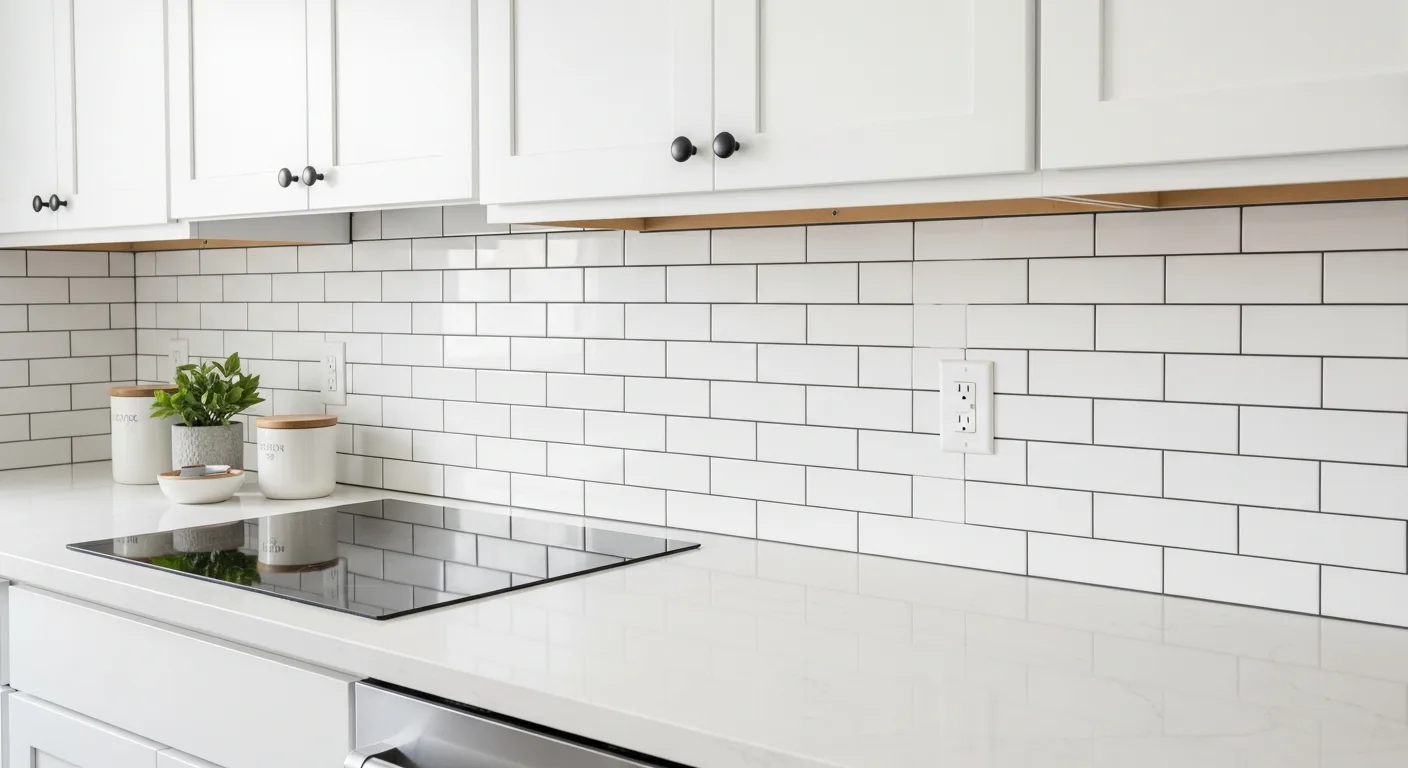
Can You Install a Backsplash Directly on Drywall?
In most kitchens, yes — standard tile goes right over sound drywall. The answer changes when the wall is painted glossy, damaged, or you have picked a heavy natural stone. Here is how to tell which situation you are in.
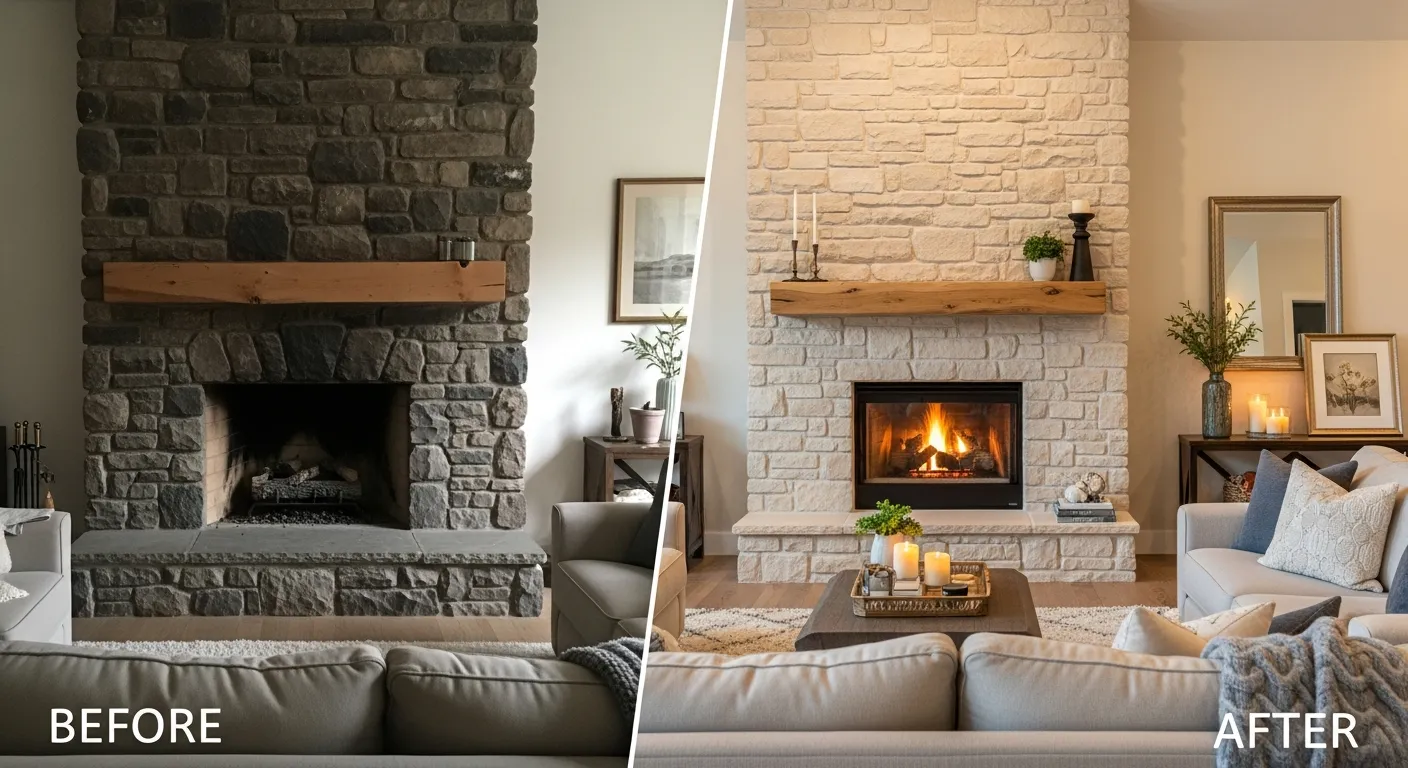
Fireplace Remodel in Michigan: Options and What to Expect
From a simple mantel update to a full stone surround transformation, here is what goes into a fireplace remodel in West Michigan.
Fireplace Resurfacing: Materials, Process, and What to Expect
Thinking about resurfacing your fireplace? Here is a straightforward look at the material options and process for West Michigan homeowners.