
Ledger Stone Accent Walls in West Michigan Homes: Materials, Process, and Design Ideas
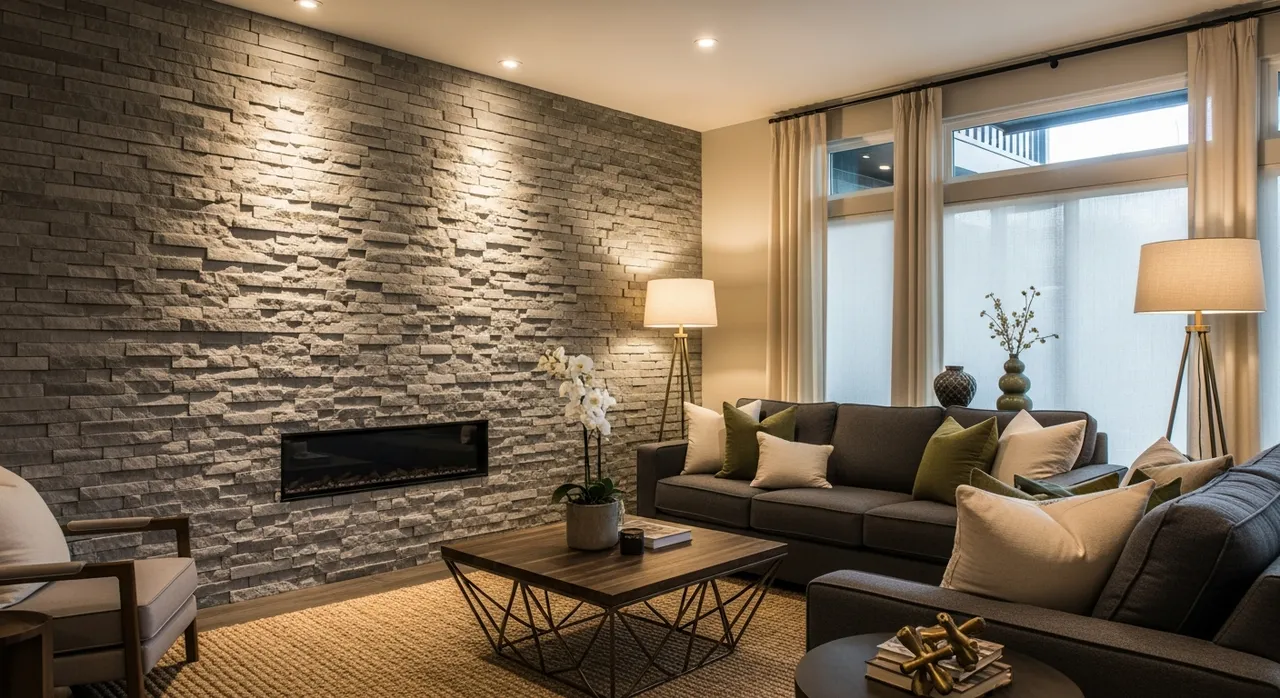
A ledger stone accent wall uses thin panels of natural or engineered stone set in a stacked, linear pattern to replicate the look of a dry-stack stone wall on any interior surface. It installs in three to five days over a properly prepared wall, creates one of the most dramatic accent wall effects available in West Michigan living rooms and great rooms, and is richer in texture and depth than any flat tile or painted surface.
What Is a Ledger Stone Accent Wall?
Ledger stone panels are fabricated by adhering thin slices of natural stone — quartzite, slate, basalt, sandstone, travertine, or other materials — to a backing panel in a tight stacked arrangement. Panels are typically 6 inches tall and 24 inches wide and install against a prepared wall with mortar, arranged so the joints stagger and disappear in the finished surface. The result looks like a hand-laid dry-stack stone wall because the stone in it is genuine. Engineered ledger stone products offer more consistent color and a wider range of options than natural stone; natural stone panels have more variation that is part of their appeal. We discuss both options during every ledger stone consultation.
Is Ledger Stone the Same as Stone Veneer?
The terms describe closely related products. Stone veneer refers broadly to any thin stone wall cladding, which includes ledger stone panels as well as other formats. Ledger stone specifically describes the stacked, linear panel format that creates the dry-stack appearance. In practice, both terms refer to thin stone cladding that installs with mortar against a prepared wall surface — the distinction is mostly in how products are marketed rather than a fundamental material difference.
What Is the Best Placement for a Ledger Stone Accent Wall?
The back wall of a living room — the wall the primary seating faces — is the strongest position. From the seating area, the full height and width of the wall is visible, and the texture and depth of the stone registers across the room in a way it does not at close range. Behind a fireplace is a natural pairing — stone and fire share a material language that is coherent without effort. An accent wall that extends floor-to-ceiling behind and around a fireplace, incorporating the surround itself, creates one of the strongest focal points in a West Michigan home. In open-plan homes, the wall at the end of the dining area visible from the kitchen and living area holds up across a large open space in a way that paint or flat tile cannot.
What Are the Best Natural Stone Options for an Interior Accent Wall?
Quartzite ledger panels in gray or silver tones are one of the most popular choices in contemporary and transitional West Michigan interiors — the tones coordinate well with white and gray cabinetry and neutral palettes. Slate in dark charcoal reads as more dramatic and suits rooms with bolder furniture and darker wood tones. Brown and tan sandstone or travertine suits more traditional or warm-toned interiors. Dark blue-gray basalt is less common but very effective in the right room. Engineered ledger stone offers these palettes in more consistent, controlled color if panel-to-panel variation is a concern.
Can Ledger Stone Be Installed Over Existing Drywall?
Ledger stone panels are significantly heavier than standard tile, and standard drywall alone is often not a sufficient substrate. In most residential applications, drywall is reinforced with cement board or replaced before installation begins. The wall framing also needs to be assessed for structural capability. Corner treatments — where the accent wall meets an adjacent wall — require specific planning: corner pieces fabricated to wrap the stone face, a wood or metal reveal trim, or a metal corner bead. We discuss corner treatment during the planning phase of every project because it affects both appearance and the installation sequence.
Does Ledger Stone Need to Be Sealed After Installation?
Yes — natural stone is porous and should be sealed after installation to prevent dust and airborne oils from penetrating the surface over time. In a living room away from cooking surfaces, the maintenance requirement is modest: seal at installation and reseal every few years as needed. In a kitchen-adjacent wall where cooking grease is airborne, seal more regularly. We seal every natural stone installation after it is complete and recommend the appropriate maintenance schedule based on the stone and the room. Call Adam Baker Masonry at (616) 612-1284 to discuss a ledger stone accent wall. We bring panel samples so you can evaluate materials in your actual room before committing. Visit our tile accent wall installation page for more.
Frequently Asked Questions
Is ledger stone the same as stone veneer?
The terms describe similar products. Stone veneer refers broadly to thin stone wall cladding, which includes ledger stone panels. Ledger stone specifically describes the stacked, linear panel format that creates a dry-stack appearance. In practice, both refer to thin stone cladding installed with mortar against a prepared wall surface.
Can ledger stone be installed over existing drywall?
Ledger stone panels are heavier than standard tile, and drywall alone is often not a sufficient substrate. In most cases, cement board is installed over or in place of drywall before the stone goes up. Wall framing structural capability is also assessed. We recommend the right substrate preparation during the estimate.
Does ledger stone need to be sealed after installation?
Yes — natural stone is porous and should be sealed after installation to prevent dust and airborne oil penetration. In a living room setting, maintenance is modest: seal at installation and reseal every few years. Kitchen-adjacent walls need more frequent sealing due to cooking grease exposure.
How do you handle the corners and edges of a ledger stone accent wall?
Corner treatment is one of the most important details in a ledger stone installation. Options include matching corner pieces that wrap the face stone around the corner, a metal or wood reveal trim at the edge, or a metal corner bead in mortar. We work through corner treatment during the planning phase because it affects both appearance and the installation sequence.
How long does ledger stone accent wall installation take?
Most residential ledger stone walls take three to five days: one to two days for substrate preparation, two to three days for panel installation and corner treatment, and a final day for sealing and cleanup. Larger walls or walls with built-in fireplace features take longer. We provide a specific timeline during the estimate.
Need Professional Help?
If you've identified masonry issues or need a professional inspection, we're here to help. Adam Baker Masonry serves Grand Rapids and the surrounding 50-mile area.
Related Articles
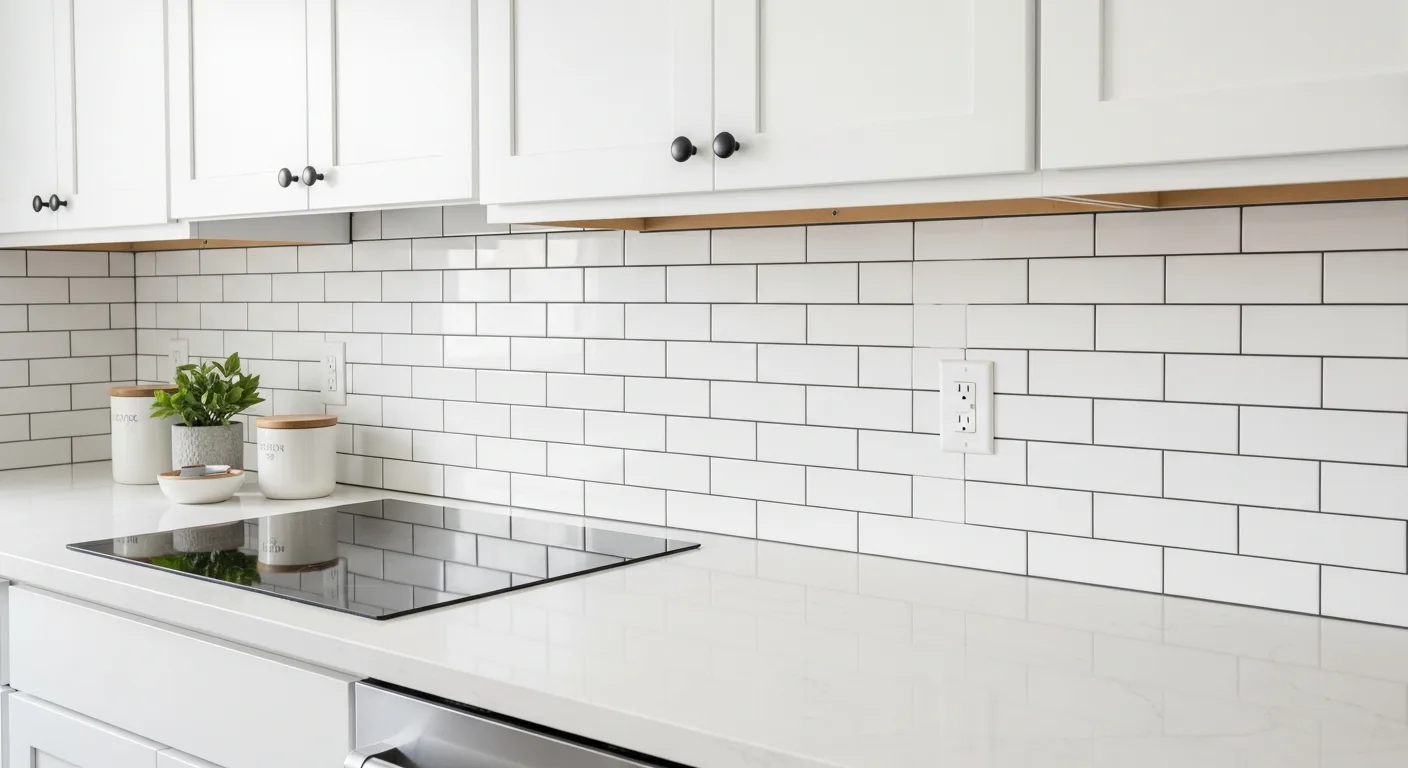
Can You Install a Backsplash Directly on Drywall?
In most kitchens, yes — standard tile goes right over sound drywall. The answer changes when the wall is painted glossy, damaged, or you have picked a heavy natural stone. Here is how to tell which situation you are in.
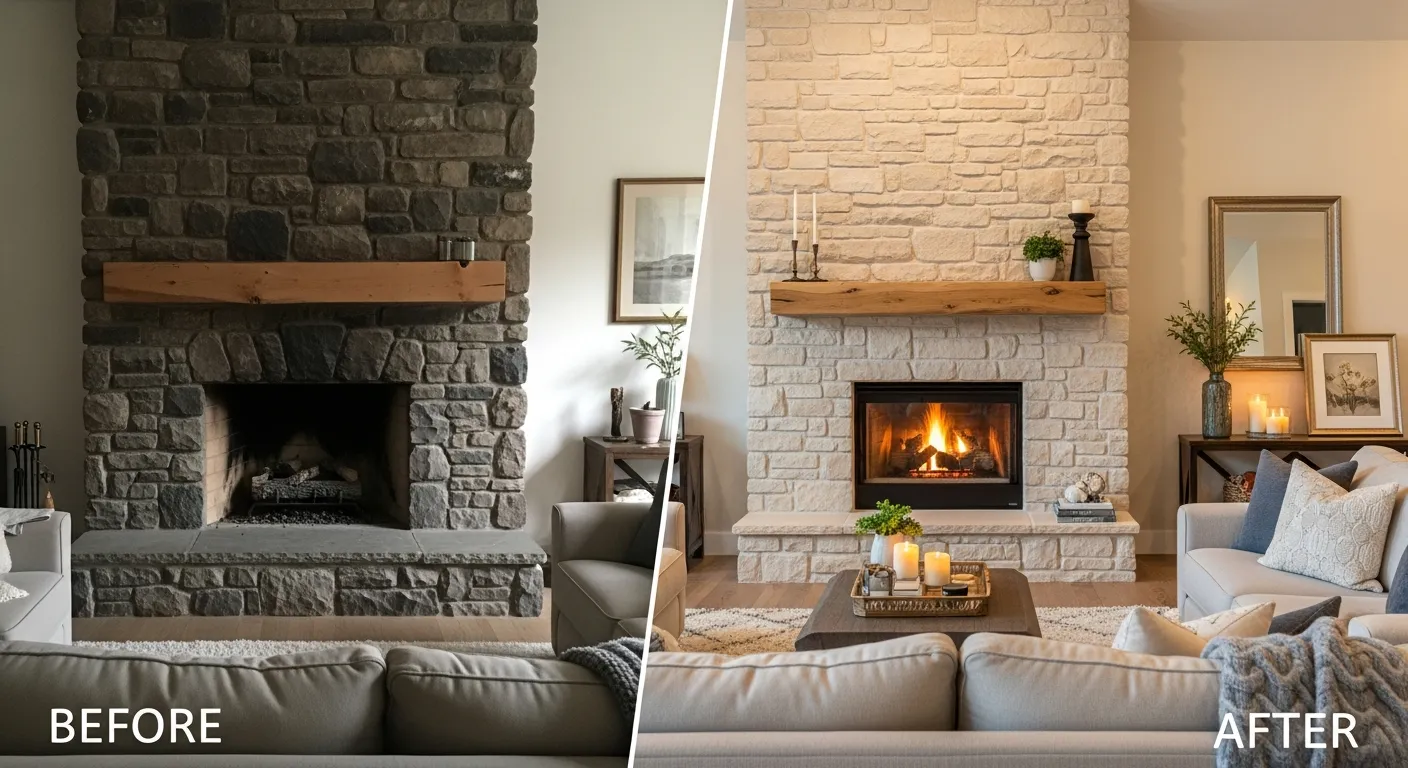
Fireplace Remodel in Michigan: Options and What to Expect
From a simple mantel update to a full stone surround transformation, here is what goes into a fireplace remodel in West Michigan.
Fireplace Resurfacing: Materials, Process, and What to Expect
Thinking about resurfacing your fireplace? Here is a straightforward look at the material options and process for West Michigan homeowners.
Tile Contractor Services Across West Michigan
Adam Baker Masonry serves homeowners throughout the Grand Rapids area and West Michigan. Select your city for local tile installation details.