
Can You Install a Backsplash Directly on Drywall?
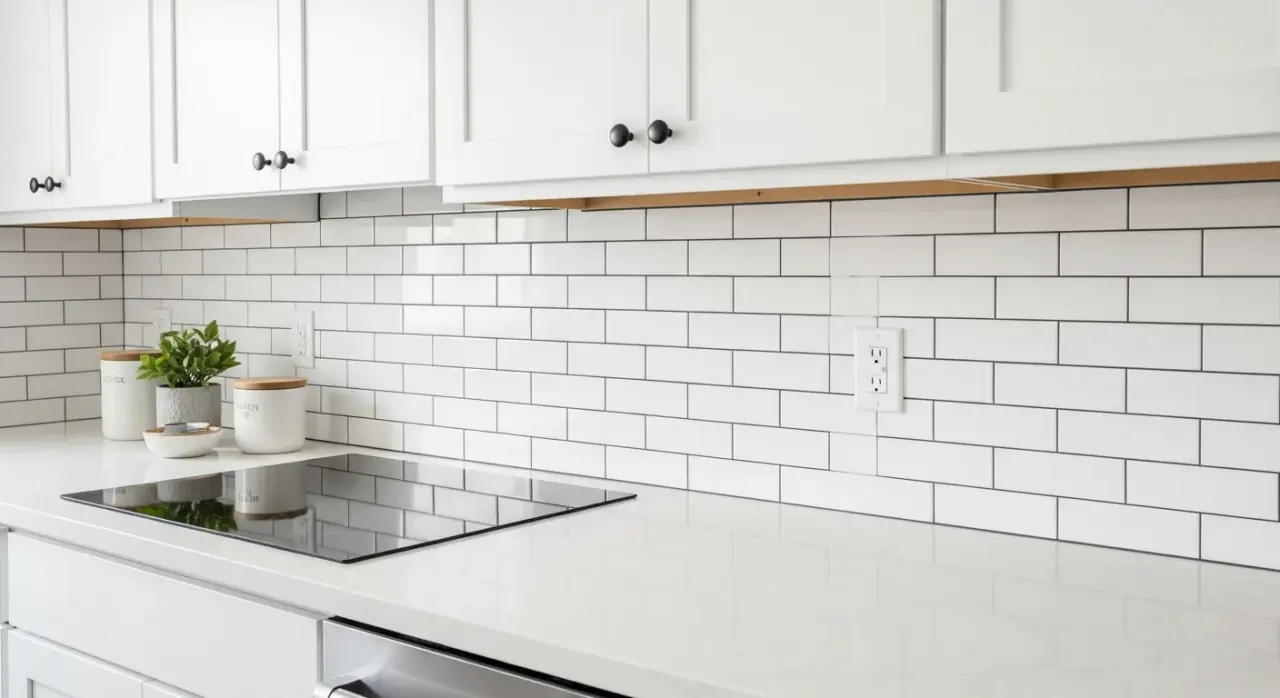
Yes — in a typical kitchen, standard ceramic or porcelain backsplash tile can be installed directly over drywall. A kitchen backsplash is a dry area in tile terms: it gets splashed and wiped down, not soaked the way a shower is. What matters far more than the drywall itself is the condition it is in and how it gets prepped. Sound, flat, well-adhered drywall is a perfectly good bonding surface. Glossy paint, wallpaper, heavy texture, and any water-damaged section are not — and heavier materials like natural stone or thin brick change the answer entirely.
Can you install a backsplash directly on drywall?
For the standard kitchen backsplash — ceramic or porcelain tile, running from the countertop to the underside of the upper cabinets — drywall is an accepted substrate and the one most Grand Rapids kitchens already have. There is no need to tear out good drywall and replace it with backer board just because tile is going on top of it. The wall behind a kitchen counter sees occasional splashing from the sink and cooktop, and a properly set and grouted tile surface handles that without the waterproofing a shower demands.
The qualifier is 'sound.' The drywall needs to be firmly fastened to the framing, flat enough that tile will not rock or show lippage, and free of any soft or crumbling areas. Tile is unforgiving of a surface that moves. If the wall flexes when you press on it, or a section has previously gotten wet, that has to be corrected before any tile goes up.
When do you need cement board instead of drywall?
Two situations change the answer. The first is genuine wet areas — a shower surround or tub wall is not a backsplash, and those require a proper backer board and waterproofing regardless of what the existing wall is made of. The second is weight. Natural stone, thin brick, and stacked ledger stone panels are considerably heavier than ceramic or porcelain tile, and standard drywall is not always enough to carry them. In those installations the drywall is typically reinforced with cement board or replaced outright, and the framing behind it gets assessed too. If you are considering a brick or stone accent wall rather than a conventional tile backsplash, assume the substrate work is part of the job.
There is also a practical middle case: a small run of drywall that has already been damaged. Rather than patching around a soft spot, it is usually faster and more reliable to cut out the bad section and replace it before tiling.
Can you put a backsplash on painted drywall?
Usually yes, but the paint is the variable, not the drywall. Flat and eggshell latex paint in good condition gives setting materials something to grab. Glossy and semi-gloss paint does not — it needs to be scuffed down so the surface is dull, which gives the adhesive a mechanical key rather than a slick film to sit on.
The bigger risk with any painted wall is paint that is not firmly stuck to the drywall underneath. Tile bonded to failing paint will eventually come off with it, because the weak layer becomes the failure plane no matter how good the tile work above it is. On older kitchens where the paint history is unknown, testing adhesion in a few places before committing is worth the few minutes it takes.
How do you prep drywall for a backsplash?
Prep is most of what separates a backsplash that lasts from one that comes loose. The wall gets cleaned of kitchen grease, which is the single most common contaminant in this specific location and the one homeowners most often underestimate — years of cooking residue behind a range will defeat an otherwise correct installation.
Wallpaper comes off completely rather than getting tiled over. Heavy orange peel or knockdown texture gets skimmed flat, because texture leaves the tile bearing on high spots instead of a continuous bed. Countertop and cabinet edges get protected, outlet covers come off, and the layout gets planned so cut tiles land where they are least visible. Only after all of that does the first tile go up.
What do you use to stick tile to drywall?
Two options cover most backsplash work. Tile mastic is a ready-mixed adhesive that is convenient for small, light, dry-area wall tile and has grab that holds tile in place on a vertical surface while it sets. Thinset mortar is mixed on site and is the more versatile choice — it is what gets used for larger or heavier tile, natural stone, and glass, and it is more tolerant of minor variation in the wall.
Material choice is not purely preference. Some tile is unsuitable for mastic, translucent glass tile will telegraph the adhesive behind it, and setting materials have minimum temperature and cure requirements specified by the manufacturer that need to be respected. The right product depends on the specific tile you have chosen, which is one reason the tile selection and the installation method get discussed together rather than separately.
What goes wrong when tile is set on drywall the wrong way?
Failures on a drywall backsplash almost never look like a problem with the tile. They show up as hollow-sounding tiles, tiles that loosen at a corner and then spread, grout that cracks in a consistent line, or in the worst case a section that releases from the wall in one piece with paint still stuck to the back of it. In nearly every case the cause is underneath — grease that was never cleaned off, glossy paint that was never scuffed, wallpaper that was tiled over, or drywall that was already compromised by moisture.
That is also why this is a job where the visible part is the smallest part of the work. A backsplash is a small square footage and a very visible one, sitting at eye level in the room people spend the most time in, and the prep is what determines whether it still looks right in ten years. If you are weighing doing it yourself, our comparison of DIY tile versus hiring a contractor covers where that decision usually turns.
Adam Baker Masonry has been doing tile and masonry work in West Michigan since 1948, and backsplash work is indoor work we schedule year-round rather than around the weather. We assess the existing wall during the estimate and tell you honestly whether it can be tiled as-is or needs prep first. See our tile backsplash installation and kitchen tile installation services, browse backsplash design ideas, or call (616) 612-1284 for a free written estimate in Grand Rapids, Ada, Cascade, East Grand Rapids, Forest Hills, and Rockford.
Frequently Asked Questions
Can you install a backsplash directly on drywall?
In most kitchens, yes. Standard ceramic and porcelain backsplash tile can be set directly over drywall, because a kitchen backsplash is a dry area that gets splashed and wiped rather than soaked. The drywall needs to be sound, flat, and firmly fastened, with no soft or water-damaged sections. There is no need to replace good drywall with backer board for a conventional tile backsplash.
Can you put a backsplash on painted drywall?
Usually yes, but it depends on the paint. Flat and eggshell latex in good condition is fine to tile over. Glossy and semi-gloss paint needs to be scuffed dull first so the adhesive has something to grip instead of a slick surface. The real risk is paint that is not firmly bonded to the wall underneath, because tile set over failing paint will come off with it.
When do you need cement board instead of drywall for a backsplash?
Two cases. True wet areas like shower and tub surrounds require backer board and waterproofing regardless of the existing wall. And heavy materials — natural stone, thin brick, and stacked ledger stone panels — weigh considerably more than ceramic or porcelain tile, so the drywall is typically reinforced with cement board or replaced, and the framing behind it is assessed as well.
How do you prep drywall for a backsplash?
Clean the wall of cooking grease, which is the most common contaminant behind a range and the one most often underestimated. Remove wallpaper completely rather than tiling over it, skim heavy texture flat, scuff any glossy paint, and cut out and replace any damaged drywall. Outlet covers come off and the tile layout gets planned before the first tile is set.
What do you use to stick tile to drywall?
Tile mastic or thinset mortar. Mastic is a ready-mixed adhesive suited to small, light, dry-area wall tile and holds tile in place on a vertical surface while it sets. Thinset is mixed on site and is the more versatile option for larger or heavier tile, natural stone, and glass. The right choice depends on the specific tile, since some tile is unsuitable for mastic and glass tile can show the adhesive behind it.
Why do backsplash tiles come loose from drywall?
Almost always because of something underneath the tile rather than the tile itself. Cooking grease that was never cleaned off, glossy paint that was never scuffed, wallpaper that was tiled over, or drywall already softened by moisture all create a weak layer that eventually releases. The symptoms are hollow-sounding tiles, loosening that starts at a corner and spreads, or grout cracking in a consistent line.
Need Professional Help?
If you've identified masonry issues or need a professional inspection, we're here to help. Adam Baker Masonry serves Grand Rapids and the surrounding 50-mile area.
Related Articles
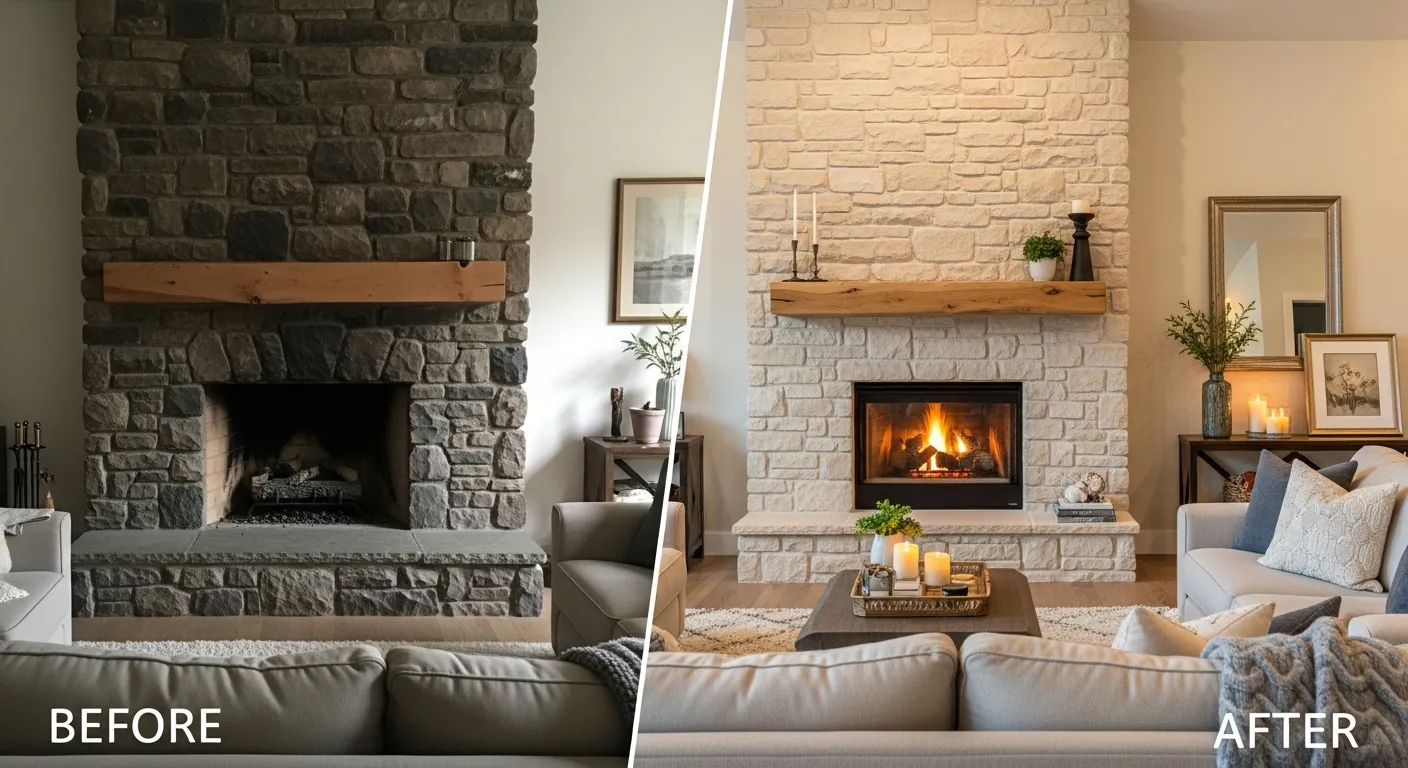
Fireplace Remodel in Michigan: Options and What to Expect
From a simple mantel update to a full stone surround transformation, here is what goes into a fireplace remodel in West Michigan.
Fireplace Resurfacing: Materials, Process, and What to Expect
Thinking about resurfacing your fireplace? Here is a straightforward look at the material options and process for West Michigan homeowners.
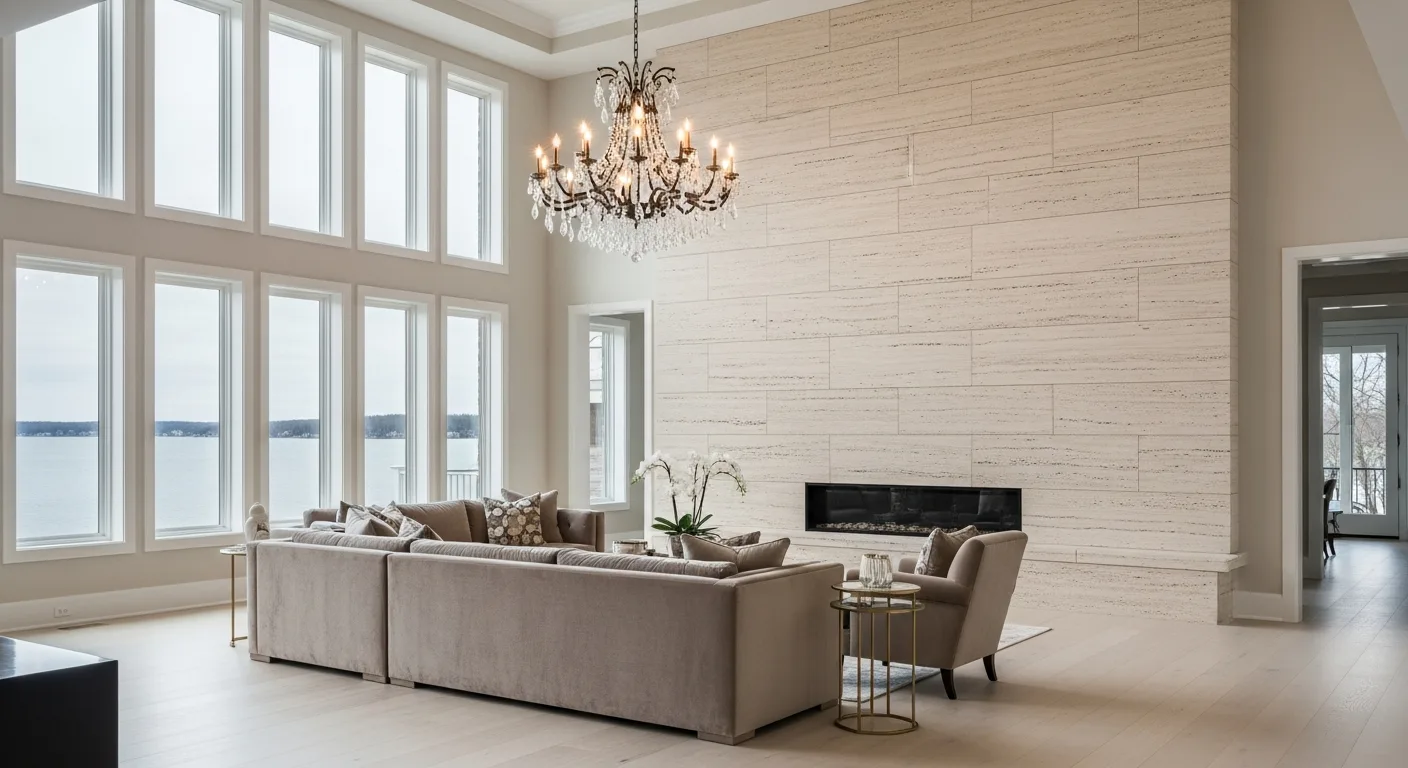
Indoor Stone Veneer Accent Wall Ideas for Michigan Homes
Looking for stone accent wall inspiration? Explore design ideas for every room in your home, from rustic farmhouse to sleek modern styles popular across West Michigan.
Tile Contractor Services Across West Michigan
Adam Baker Masonry serves homeowners throughout the Grand Rapids area and West Michigan. Select your city for local tile installation details.